A Massey Ferguson 135 clutch that slips, drags, grinds when selecting a gear or fails to drive the PTO properly does not always need a complete clutch kit. Incorrect pedal free play or external linkage wear can imitate more expensive faults. This MF 135 clutch adjustment and fault-finding guide explains the symptoms, the differences between clutch configurations and how to decide whether an adjustment, inspection or replacement is appropriate.
Fitment note: MF 135 tractors were supplied in different specifications, including single-stage and dual-stage clutch arrangements. Pedal settings, access points and internal adjustments are not interchangeable. Use the workshop manual for your tractor's serial number rather than a universal adjustment measurement found online.
How the MF 135 clutch works
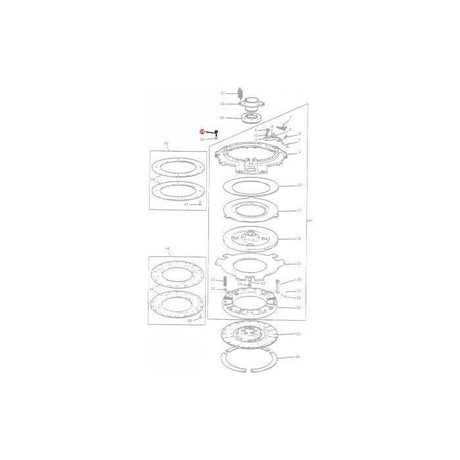
The clutch separates engine power from the transmission so the tractor can be brought to a stop and gears selected. On tractors equipped with a dual-stage clutch, partial pedal travel can release the transmission drive, with further pedal movement disengaging the PTO stage. A single-stage configuration behaves differently. Identify which system is fitted before diagnosing a PTO complaint.
MF 135 clutch problems: symptoms and likely causes
| What you notice | Possible causes | What to check |
|---|---|---|
| Engine revs rise but forward speed does not | Clutch slip, wear, oil contamination or incorrect release adjustment | Pedal free play and the cause of any contamination. |
| Gears are hard to engage or grind | Incomplete clutch disengagement, linkage travel, wear or other transmission issues | Pedal/linkage movement and clutch release operation. |
| Release bearing noise when pedal is pressed | Release bearing wear or incorrect setup | Arrange inspection rather than continuing to operate. |
| PTO behaviour differs from expectation | Clutch configuration, staged release adjustment or internal wear | Verify single- versus dual-stage system and the manual. |
| Pedal engagement point has changed | Linkage wear, adjustment or clutch wear | Compare actual pedal operation with the model-specific procedure. |
How to check MF 135 clutch free play
The correct free-play specification depends on the fitted assembly and tractor variant. A safe preliminary inspection can establish whether the external mechanism is obviously damaged before any adjustment is attempted:
- Park safely. Stop the engine, apply the parking brake, select neutral, lower attachments and prevent unintended movement. Keep bystanders away from the tractor.
- Identify the clutch type. Determine from the tractor serial number and workshop documentation whether it is single- or dual-stage, and whether the linkage has been modified.
- Inspect pedal and linkage. Look for missing retaining clips, worn pins, damage, binding or excess movement. Replace damaged parts before trying to compensate through adjustment.
- Measure pedal free play as the manual defines it. Take the measurement at the specified point and in the specified manner. Do not assume that a measurement at the pedal pad matches an internal release-setting measurement.
- Compare with the exact factory specification. If adjustment is needed, use the official procedure and the correct specified setting. An incorrect adjustment can cause the release bearing to run continuously or prevent the clutch from releasing fully.
- Recheck safe operation. If the clutch still slips, drags or has abnormal noise, stop use and arrange a workshop diagnosis. Do not make blind internal adjustments through inspection openings.
Dual clutch and PTO adjustment: what is different?
On a dual-stage assembly, the transmission and PTO stages have separate release behaviour. A complaint that the tractor drives normally but the PTO does not disengage correctly cannot be solved reliably by changing the main pedal stop alone. Internal release settings require specialised measurement, the correct workshop procedure and, often, professional service. Never approach an operating PTO or defeat a guard to test an adjustment.
When an adjustment will not solve the problem
Repeated clutch slip under load, obvious oil contamination, damaged springs, severe release-bearing noise and badly worn friction surfaces can indicate mechanical defects. Correcting these faults may require separating the tractor, replacing components or addressing an engine/rear oil seal leak. These are workshop jobs requiring suitable lifting and support equipment.
What parts may be involved in an MF 135 clutch repair?
- Friction plates and pressure-plate assemblies: matched to the tractor's clutch configuration, engine and serial number.
- Release bearings and operating components: where inspection shows wear or damage.
- Pedal linkage, pins and bushes: where excess free movement or stiffness originates outside the clutch housing.
- Pilot components and seals: only where the workshop diagnosis requires them.
- Gaskets and other service parts: selected against the actual assembly rather than assumed interchangeable.
Find available components in our tractor clutch parts collection and Massey Ferguson 135 parts collection. For other MF 135 transmission components, read our MF 135 transmission parts guide.
MF 135 clutch adjustment FAQs
What is the correct MF 135 clutch pedal free play?
There is no safe universal measurement for every MF 135 configuration. Confirm the specific clutch type and follow the official workshop manual's measurement point and setting.
Why does my MF 135 grind when changing gear?
Possible causes include incomplete clutch release, incorrect linkage travel or transmission-related faults. Check the external linkage first and have the tractor inspected if grinding persists.
Can I adjust a dual-stage MF 135 clutch without splitting the tractor?
Some external checks may be possible, but internal release arrangements and adjustment access differ. Do not attempt internal adjustments without the correct model-specific manual and tools.
Will changing the pedal adjustment fix a slipping clutch?
Only if incorrect free play or linkage setup is contributing to the problem. Worn or contaminated friction components normally need their underlying fault addressed.
Before ordering clutch parts
Record the tractor model and serial number, the single- or dual-stage clutch type, any part markings and the exact operating symptom. Contact Farming Parts for a fitment check or explore Massey Ferguson 135 parts. For a separate common MF 135 fault, read our hydraulic lift troubleshooting guide.